In late autumn 2016, Qing Guo sat before a stack of case files detailing a fatal highway collision.
On the Handan section of the G4 Beijing–Hong Kong–Macau Expressway, a Tesla Model S traveling at roughly 120 km/h rear-ended a road-sweeping maintenance truck. The 23-year-old driver was killed on impact. Seeking answers, the driver's family wanted to know whether the vehicle's Autopilot system had been engaged at the moment of the crash. They approached Tesla repeatedly requesting access to the onboard vehicle telemetry, but received no definitive response.
At the time, China offered no legal or technical precedent for such an inquiry. Judicial practice had never confronted this scenario, and no accredited forensic appraisal institution had ever dismantled an intelligent and connected vehicle (ICV) to retrieve operational telemetry. Where the data resided, how it could be extracted, and how it should be legally interpreted were questions without answers.
"There were no skid marks at the scene," Ms. Guo recalled. "Theoretically, there was a fifty percent probability that driver-assist was never activated—that the driver was simply distracted or asleep."
She resisted settling on an intuitive assumption. The other fifty percent was equally critical: if the system was indeed operating, how should the division of responsibility between the human driver and the machine be understood? How should an automaker define and disclose a product’s operational boundaries? When technology takes to the road before legal concepts have solidified, on what foundation does liability rest?
For automotive litigators, the work often begins in this space of uncertainty.
Data Inside the Wreckage
When Tesla’s Autopilot first entered the Chinese market, its branding was colloquially and commercially translated as zidong jiashi—literally, "automatic driving." In 2016, a pronounced gap separated technological capabilities, statutory definitions, and public perception. Just months after the Handan collision, a fatal Autopilot crash in Florida attracted global headlines, thrusting the question of automated driving liability into mainstream international debate.
Leading her litigation team, Ms. Guo petitioned the court to compel production of the vehicle's onboard data. Facing non-cooperation from the automaker, the court ultimately ordered an independent judicial forensic appraisal, commissioning a qualified third-party institution to dismantle the vehicle and extract its embedded digital records. The process was protracted and technically arduous. Two years later, the forensic report delivered its conclusion: at the moment of the crash, the vehicle had been operating with Autopilot active.
In retrospect, that finding may appear as a routine link in an evidentiary chain. In 2016, however, it required forensic technicians to confront an unfamiliar electronic architecture without standardized extraction protocols, pioneering a pathway for encrypted, embedded telemetry to enter formal judicial proceedings.
During the litigation, Tesla revised the language across its Chinese website and owner manuals, shifting from "automatic driving" to "assisted driving." In subsequent years, the classification of driving automation and the corresponding boundaries of driver responsibility emerged as central industry concerns. The public came to recognize that this generation of technology represented Level 2 driver assistance: a system capable of steering, acceleration, and deceleration under specific operational parameters, while requiring the human driver to maintain constant situational awareness and remain prepared to take immediate control.
These shifts cannot be attributed solely to the outcome of a single lawsuit. Industry standards evolve under the combined momentum of engineering advancements, regulatory enforcement, international standards, commercial product iterations, and shifting public awareness. What this case accomplished—stated with measured precision—was that it brought an issue long obscured by marketing rhetoric squarely before the courts, the automotive sector, and the public: what the system is genuinely capable of doing, and what the driver has a right to know.
The case was covered extensively by China Central Television's investigative programs News 1+1 and Legal Online, and was later featured in "Warning of Risks," the fourth episode of CCTV-9’s documentary series The Intelligent Era. Concurrently, Ms. Guo collaborated with the School of Law at the University of International Business and Economics (UIBE) to publish the 2020 Annual Legal Report on Intelligent Driving Passenger Vehicles, enlisting leading scholars from Renmin University of China, Tsinghua University, and the Chinese Academy of Social Sciences as advisors to analyze liability allocation, data security, and regulatory challenges under China’s prevailing legal framework.

Establishing the facts marked a milestone, but not an endpoint. In the years that followed, an increasing number of vehicle owners and automotive manufacturers turned to Ms. Guo. Her team has since handled more than 300 automotive product quality and liability disputes—spanning brake system failures, vehicle fires, traction battery thermal runaway, and airbag deployment defects. Of those disputes, fewer than one percent ever proceeded to court.
Deconstructing Complexity
Before entering the legal profession, Ms. Guo spent a decade in journalism.
A graduate in English from Beijing Foreign Studies University, she worked in the External News Reporting Department of Xinhua News Agency and CCTV’s News 30. Covering high-level international affairs demanded simultaneous bilingual dispatches, with English wires often prioritized for transmission. "Between Xinhua, Reuters, and TASS, the wire that broke the news earliest had the highest pickup rate," she said. Facts had to be scrupulously verified, prose had to be exact, and deadlines did not yield.
Passing the national judicial examination at 32, she joined King & Capital Law Firm, starting as a trainee lawyer. What made her question her career pivot early on was not a combative courtroom exchange, but an English-language commercial contract.

"A single sentence stretched across five lines, clauses nested within clauses, utilizing technical legal language to articulate an intricate commercial transaction. I read it eighteen times until my brain felt numb, and I still could not decipher it."
That evening, she asked herself why she had left a beloved career in international journalism for the law. The following morning, she sat down again, dismantled the sentence clause by clause, parsed each component, and reconstructed the whole. "There are no shortcuts—only persistence."
This deconstructive method became her foundational approach to automotive disputes. A consumer asserts "brake failure"; engineers cite control algorithm logic; corporate executives weigh product liability exposure and enterprise reputation; media reports distill the tension into a provocative headline. Diverse stakeholders converge around the same vehicle, ostensibly addressing one dispute, yet speaking entirely different languages. Ms. Guo begins by tracing the provenance of each factual assertion, isolating the disparities between technical facts, legal facts, and consumer perception.
Journalistic training did not fade with her career change. It instilled a habit of interrogating the underlying interests behind conflicting narratives, alongside a vigilance against technical terms being distorted in public discourse. Legal discipline, conversely, requires mapping those facts back onto rules of evidence and statutory liability frameworks. For automotive products—highly engineered systems directly tied to human safety—these two skill sets converge.
In 2010, Ms. Guo was selected for the Lord Chancellor’s Training Scheme for Young Chinese Lawyers (LCTS) in the United Kingdom, an elite cohort of just 13 practitioners. She candidly notes that her selection was driven by her linguistic proficiency rather than senior legal experience. Yet during her year in London, she absorbed far more than legal phraseology; she observed a distinct procedural rhythm for managing complex commercial disputes.
During an international arbitration involving hundreds of millions of pounds, opposing counsel argued fiercely before the tribunal, shared coffee cordially during recess, and returned to deliver their next rounds of advocacy. Ms. Guo asked the Queen's Counsel mentoring her why the two sides remained so remarkably composed.
The QC replied flatly: "Nobody died."
The statement sounded detached, yet it stayed with her for years. Advocates can remain unyielding on substantive legal merit without allowing dispute resolution to degenerate into an emotional confrontation.
The British legal market also demonstrated the scale of time required to untangle complex controversies. In the BCCI liquidation litigation, Nicholas Stadlen QC delivered an opening submission for the Bank of England that lasted 119 court days over four months, addressing 125 key contentious points. What Ms. Guo observed was not merely the scale of legal costs, but the structural reality that complex matters are rarely settled by a single flash of courtroom brilliance. They require the prolonged, disciplined coordination of evidence, procedural mechanics, and cross-disciplinary expertise.
The collaborative model of UK firms left an equal impression. Complex mandates were managed by multi-disciplinary teams rather than a single lawyer attempting to handle every component. Fact investigation, procedural management, substantive legal analysis, and client communications were distinctly allocated; patience itself was a core professional competency.
When later managing settlement conferences where vehicle owners, automotive engineers, sales executives, and in-house counsel shared the same room, Ms. Guo rarely rushed to suppress the dialogue with legal terminology. The sharper the dispute, the more essential it is to untangle the conflated narratives first.
Three Hundred Disputes, Not One Script
Automotive product disputes involve an intricate triadic tension: technical facts must be objectively verified, legal liabilities must be strictly delineated, and the enterprise must simultaneously navigate public scrutiny and market dynamics. These three fronts unfold concurrently; mismanaging any one can alter the trajectory of the entire controversy.
"Winning the litigation while losing the market is a very real hazard in the automotive sector," says Ms. Guo.
She requires her team to advance steadily through continuous incremental work, tracking automotive engineering developments, regulatory updates, and precedent cases. A lawyer cannot replace an engineer, but must understand an engineer—at least well enough to pinpoint where technical facts intersect with legal liability. "When the time comes to step back and defer to technical specialists, you must step back. But beforehand, you must possess the technical literacy to identify where the friction point actually lies."
Her team systematically archives completed matters: the technical facts established, the specific remedies sought by the consumer, the negotiations conducted, the procedural mechanisms employed, and the shifts in public perception. The database does not make decisions for counsel; it ensures that future strategic choices do not rely on intuition.
From this body of casework, Ms. Guo classifies the root causes of disputes into four distinct categories:
-
Product defects recognized under product liability law. Design defects, manufacturing defects, and failure to warn (warning defects). A design defect implies systemic risk across a model line; a manufacturing defect is typically confined to isolated units or production batches; a warning defect is far more subtle—the product may perform as intended, but the manufacturer failed to adequately inform consumers of operational precautions or boundary conditions in specific scenarios.
-
Technically compliant products with defective explanations. The fact that an engineering anomaly can be explained scientifically does not mean a consumer understands, believes, or accepts that explanation.
-
Information asymmetry between consumer expectations and actual product capabilities. Gaps between marketing portrayals and real-world performance limitations.
-
Friction originating within after-sales customer service and dealer networks. Operational missteps that escalate ordinary inquiries into adversarial disputes.
"It comes down to these core categories. Once you map a dispute against this matrix, the underlying structural issue becomes transparent."
Yet taxonomy is merely the foundation. Ms. Guo once led a team handling more than 220 customer complaints and negotiations across China for a German luxury marque; ultimately, only two advanced to formal litigation. "This is not about mass-producing cookie-cutter responses. Each case must be handled individually, because each circumstance is unique." The identical complaint—"the car has a defect"—can conceal anxiety regarding personal safety, distrust of corporate disclosures, frustration with dealer service, or a genuine mechanical anomaly requiring third-party forensic appraisal. Product issues can be categorized, but human concerns cannot be resolved with a uniform script.
A litigation rate of under one percent reflects far more than negotiation efficacy. The decisive work occurs long before an action is filed: inspecting the vehicle, retrieving event data, having engineers explain system architecture, assessing whether forensic testing is warranted, isolating the counterparty's primary grievance, and determining whether formal legal proceedings represent the most effective tool at that moment.
The emergence of connected vehicle data has introduced further complexity. The same data set can represent an enterprise data asset for iterative software improvements, admissible electronic evidence in civil or administrative proceedings, and protected personal data belonging to the vehicle user. These three legal identities overlap without settled legal boundaries. Counsel must not only comprehend the technical mechanics of data collection, storage, and transmission, but also navigate their distinct ramifications across contract law, tort liability, privacy regulations, and cross-border data transfer compliance.
In the 2016 Tesla case, vehicle telemetry served primarily as a forensic key to unlock the factual circumstances of the crash. In today’s smart vehicle disputes, the rights to access data, the standards for its evidentiary interpretation, and the regulatory approvals required for its cross-border transfer frequently constitute independent disputes in their own right.
From Solo Practice to an Integrated Mosaic
In 2022, following eighteen years of practice at King & Capital, Ms. Guo joined Anli Partners as a Senior Partner to establish its Automotive Industry Legal Practice Center.
Reflecting on this transition, she rarely draws comparisons between the two institutions. King & Capital was the firm where she matured from a trainee; whenever junior associates encountered a challenging matter, a single message would assemble colleagues in a conference room for an impromptu seminar. Those collaborative scenes remain enduring memories. What ultimately drove her decision was that legal services in the automotive sector had expanded far beyond the boundaries of standalone dispute resolution.
From research and development and manufacturing to distribution, sales, and aftermarket operations, a vehicle touches upon intellectual property, data compliance, cross-border investment, overseas employment, and crisis management. Client challenges do not present themselves according to a law firm’s internal departmental silos. The Automotive Practice Center Ms. Guo built at Anli Partners integrates more than a dozen specialty areas, leveraging practice groups that consistently secure top-tier rankings in leading international legal directories.
She likens this collaborative structure to assembling a jigsaw puzzle: "When a client approaches us, my first step is deconstruction—determining whether the missing piece is circular or square. Then I review our partnership resources and our overseas legal networks to locate the exact piece that fits."
In an outbound cross-border acquisition, for example, several corporate partners might possess cross-border transactional capability, but only a subset will have specialized experience in the automotive supply chain. Further variables include the target jurisdiction, the degree of project management expected from lead counsel, and the quality of local co-counsel. A lawyer’s value lies not only in answering every inquiry directly, but in knowing precisely who must be brought into the matter.
This institutional collaboration mirrors the complex case management she observed in London years earlier. As the automotive value chain extends, the operational limits of individual generalist advocacy become apparent. This is particularly acute as Chinese automotive manufacturers expand into international markets, where trade remedies, foreign direct investment, plant construction, dealership network structuring, advertising compliance, labor management, cross-border financing, and international dispute resolution often unfold simultaneously. Adhering to an ad-hoc model of finding counsel only after a crisis emerges leads to compounding costs and elevated enterprise risk.
Ms. Guo serves as Chief Legal Advisor to the Chief Brand Officers Council of Chinese Automotive Enterprises (CB20), a leadership platform established in 2021 by the China Association of Automobile Manufacturers (CAAM), comprising 18 automotive groups and more than 30 brands representing over 85 percent of China’s passenger vehicle market by sales volume. She also maintains an active research partnership with the UIBE School of Law, translating recurring practical issues identified in her casework into academic inquiry.
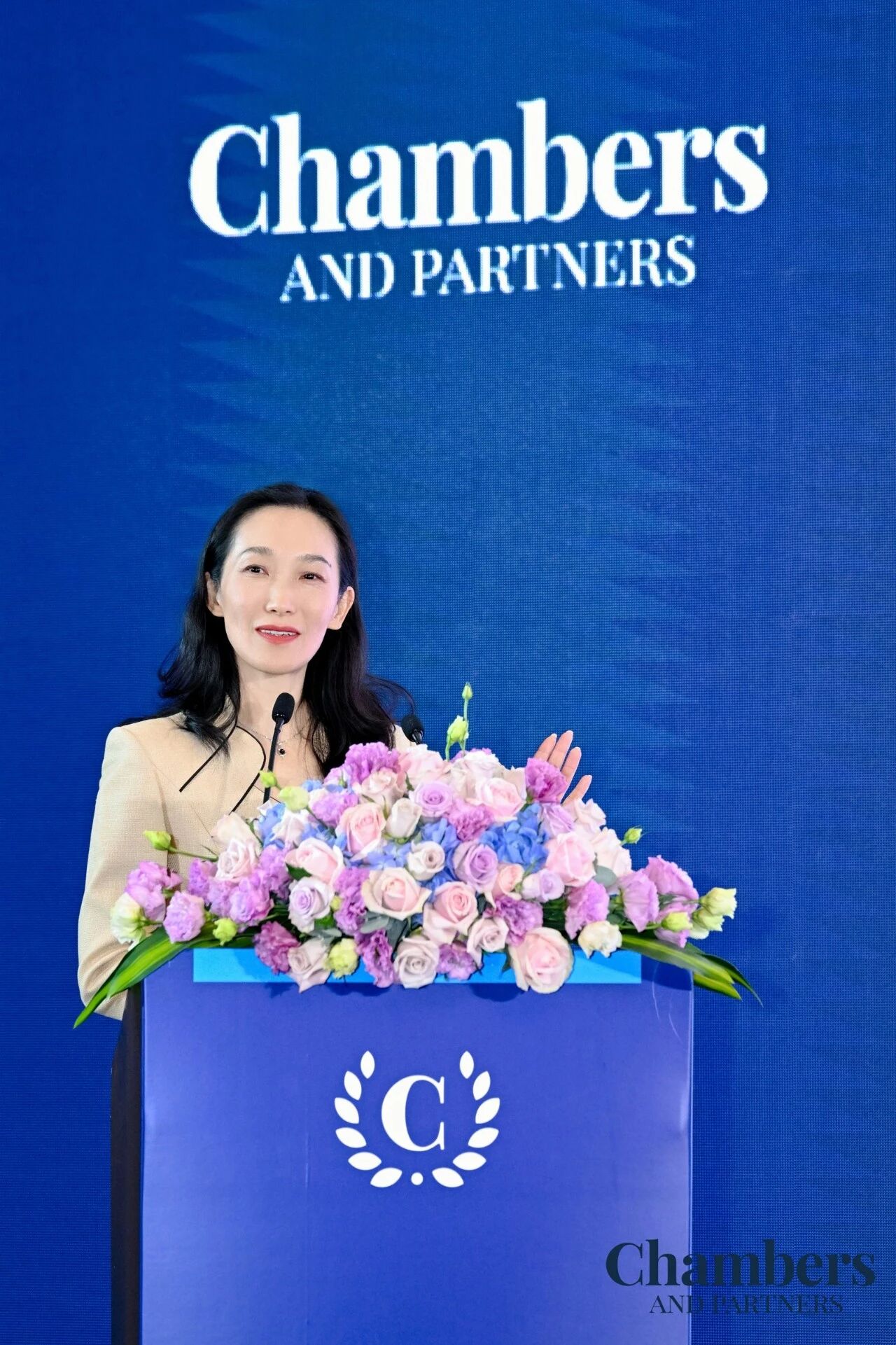
She harbors no illusions that an individual legal report or symposium can instantly eliminate regulatory vacuums. Rather, these initiatives establish shared analytical benchmarks for corporate counsel, automotive engineers, scholars, and practicing attorneys before the next wave of industry disputes arrives.
Where Complete Answers Remain Elusive
Transformations in the automotive industry invariably occur first within engineering laboratories and the commercial market; the law arrives later. How driver-assistance capabilities should be marketed, how functional boundaries must be communicated, who owns connected-vehicle telemetry, and what legal thresholds govern cross-border data transfer cannot be answered definitively by a single statutory provision or court judgment.
This explains why the substantial core of Ms. Guo’s practice takes place outside the courtroom. She must exercise disciplined restraint while the factual record remains incomplete, translate back and forth between engineering terminology and legal rules, and determine whether constructive dialogue remains viable when an automaker seeks to mitigate legal risk while a consumer demands accountability.
"The law consists of rules, but rules are designed for human application. You must first understand how people perceive their circumstances before you can know how the rules should be applied."
After resolving more than three hundred automotive disputes, she cannot eliminate the industry’s systemic uncertainties. What she can do is refuse to present speculation as established fact, avoid conflating temporal correlation with legal causation, and reject hyperbolic promotional terminology that obscures a system’s true technical limits. She brings in engineers when technical expertise is required, initiates formal proceedings when legal remedies are necessary, and preserves every opportunity for resolution outside adversarial litigation.
The electronic data retrieved from that 2016 collision was the first of its kind secured by Chinese litigators after years of evidentiary pursuit. Years later, when Ms. Guo reflects on that case, the focus remains not on courtroom victory or defeat, but on how that single vehicle compelled all stakeholders to pause and confront a fundamental question for which no established answer yet existed.
Where legal frameworks remain unformed, certainty cannot simply be declared. It grows incrementally—through a single data extraction, a rigorous forensic appraisal, a more precise product disclosure, and a principled negotiation conducted free from emotional confrontation.
 Qing Guo
Partner, Anli Partners
Qing Guo holds a Bachelor of Arts in English from Beijing Foreign Studies University and a Master of Laws (LL.M.) from Renmin University of China. She is an alumna of the Lord Chancellor’s Training Scheme for Young Chinese Lawyers (LCTS) in the United Kingdom. Her practice focuses on automotive product liability and dispute resolution, crisis management and reputational risk mitigation, and civil-criminal intersect litigation.
Prior to private practice, Ms. Guo worked at Xinhua News Agency and the CCTV News Center. Since qualifying as a full-time attorney, she has served as legal counsel to intergovernmental organizations and numerous Fortune Global 500 multinationals. She has represented clients in a vast portfolio of major and complex civil and commercial litigation, earning widespread client acclaim for her rigorous trial advocacy, refined negotiation acumen, and persuasive presence. Ms. Guo has established an exceptional track record in commercial dispute resolution and cross-border criminal proceedings; several of her landmark matters—including China’s first fatal collision dispute involving automated driving systems—serve as foundational legal references for the industry.
At The Table: Poise and Edge in a Complex World
Presented by UWIN Consultancy, At The Table is an in-depth dialogue series dedicated to women leaders across the legal and financial sectors. We believe that every nuanced balance struck between institutional rules and human insight deserves to be seen, articulated, and carried forward.
At The Table is an unscripted conversation. We invite women decision-makers navigating the frontiers of business and law to convene around a single table, exploring the realities that lie beyond court judgments and transaction documents: the trade-offs within strategic negotiations, the hesitations before critical decisions, and the endurance tested across market cycles. Our hope is that these authentic voices transcend the screen, providing clarity and resonance for those charting their own course.
Wherever you stand, you have the agency to reinterpret the rules and the prerogative to define your own direction. The poise and edge honed through deep professional practice move deliberately, speaking with quiet authority across every arena.
Claim your seat at the table.